
Engagement does not disappear loudly. No one announces that they have stopped caring. What happens instead is quiet and incremental. Someone who once volunteered now waits to be asked. Another stops offering ideas unless prompted. A third becomes exact about role boundaries, delivering precisely what is required and nothing more.
None of this looks urgent.
All of it is.
By the time leadership sees the pattern in data, months of private decisions have already been made. Decisions about how much of oneself to invest at work. Whether speaking up is worth the effort. Whether extending energy beyond formal responsibility still feels meaningful. Whether staying is the right choice.
This is not a motivation problem. It is a “conditions” problem.
Human resource consulting services shape those conditions in ways that are often invisible until they begin to fail. How people are hired. How performance is evaluated. What behaviour is actually rewarded. Whether development feels real or rhetorical. Whether feedback travels in more than one direction.
At Evolve, this work often begins with leadership and HR teams sitting together to examine where the employee experience breaks down in practice rather than in policy. Where hiring promises one thing and daily management delivers another. Where performance conversations avoid what actually needs to be said. Where development exists on paper but not in behaviour.
Employee engagement consulting becomes necessary because organisations lose sight of how work actually feels on the ground. Information softens as it rises. Concerns are translated into language that makes them easier to hear and therefore easier to dismiss. What surfaces are symptoms while the underlying experience remains unnamed.
This is where behavioural work becomes practical. Through DISC profiling and values insight, teams begin to understand how different work styles interact without awareness. One person thinks quietly before speaking. Another needs to talk to think. A third will not commit without data. Someone else moves quickly and adjusts later. None of these approaches is wrong, but without understanding, each person reads the others as difficult rather than different.
Teams at Evolve do not stop at learning profiles. They revisit real projects where friction appeared and reinterpret those moments through work style rather than personality. What felt like interpersonal tension becomes an understandable difference. And once understood, it becomes manageable.
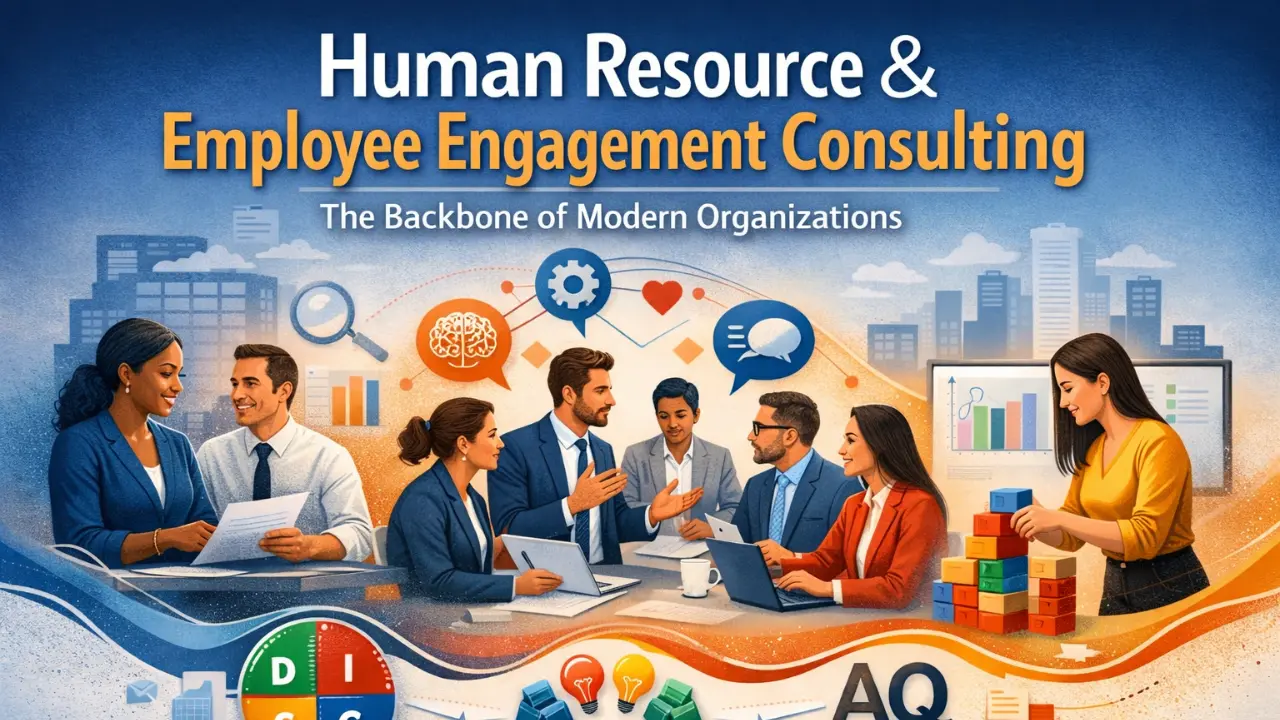
At Evolve, we don’t treat engagement as a single score. We treat it like a system — and we treat it scientifically. We use validated assessments and structured diagnosis to reduce guesswork and make the human system measurable. We assess behaviour (DISC and values) to understand how people interact and what they protect when pressure rises. We map Gallup CliftonStrengths to identify where energy naturally lifts and where contribution becomes draining. And we measure adaptability (AQai) across Ability, Character, and Environment to understand how people cope when the organisation changes around them. When you can see the system, you can fix the system.
Strengths work builds on this by showing where natural talents exist and how to position people so those strengths are used rather than suppressed. When role design conflicts with how someone naturally operates, performance becomes effortful and eventually depletes. When strengths are recognised and applied intentionally, contribution feels energising rather than draining.
Change management consulting often focuses on communication and sequencing. But the deeper issue is trust. Whether people believe the cost of adapting has been honestly considered. Whether difficulty encountered during change will be understood or used against them later.
People development consultancy addresses this by creating conditions where growth does not require self-protection. Where people can take risks, make mistakes, adjust, and learn without fear that one misstep defines them. That requires psychological safety demonstrated consistently by leadership, not declared in policy.
This is why emotional intelligence training matters so much at managerial levels. Managers translate organisational intent into daily experience. If they cannot regulate stress, that stress becomes the team’s environment. If they take feedback personally, people stop offering it.
From inside business consulting across industries, one pattern is consistent. Technical solutions succeed or fail based on the human system underneath them. Customer experience consulting can map every touchpoint and automotive consulting can optimise operations, but if people feel unsupported or unseen, quality erodes in ways that show up too late.
Human resource consulting services form the backbone because they shape whether people feel their effort matters beyond output. Whether concerns are addressed. Whether development represents real investment. Whether the organisation functions as a system that grows capability rather than extracting it.
When these conditions are in place, engagement does not need to be engineered. It appears naturally because people feel recognised, supported, and able to contribute fully.
When they are not, organisations continue functioning for a while on the momentum of people who quietly stopped bringing themselves to work long before anyone noticed.